Prioritized opportunities.
Our assessment of your workflows identifies where AI could help, with the business value, required inputs, likely effort, and open questions behind each recommendation.
AI ConsultingStrategy & roadmap
We work with your team to understand your workflows, identify where AI can help, and build a roadmap tailored to your goals and resources.
We assess opportunities with your team and turn the findings into recommendations and a practical roadmap for your company.
Our assessment of your workflows identifies where AI could help, with the business value, required inputs, likely effort, and open questions behind each recommendation.
We compare relevant tools, vendors, and approaches and explain our recommendations, including cost assumptions, practical constraints, and tradeoffs.
A phased action plan with responsibilities, resource estimates, pilot success criteria, and review points. The planning period fits your priorities and capacity.
We speak with the people doing the work and review your current workflows, tools, and information. Together, we identify the opportunities worth examining.
We compare business value, readiness, effort, and risk, then recommend where to start. Your team helps shape the priorities so the roadmap reflects how your company works.
From the first conversation to the roadmap review, we build the plan around your company and the people who will carry it forward.
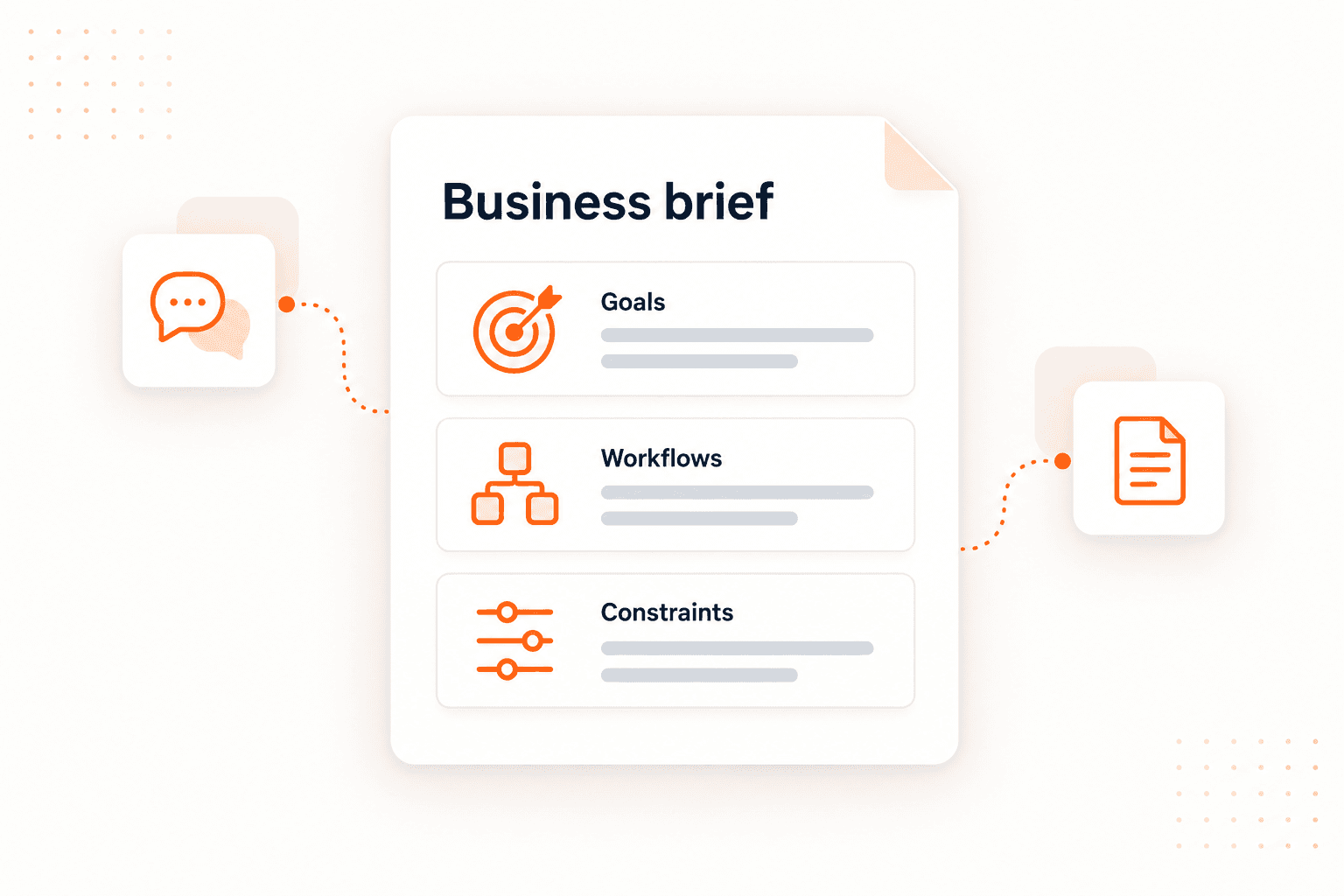
We discuss your goals and agree on the scope, fee, and consulting timeline. We then meet with key people on your team to understand the workflows and constraints.
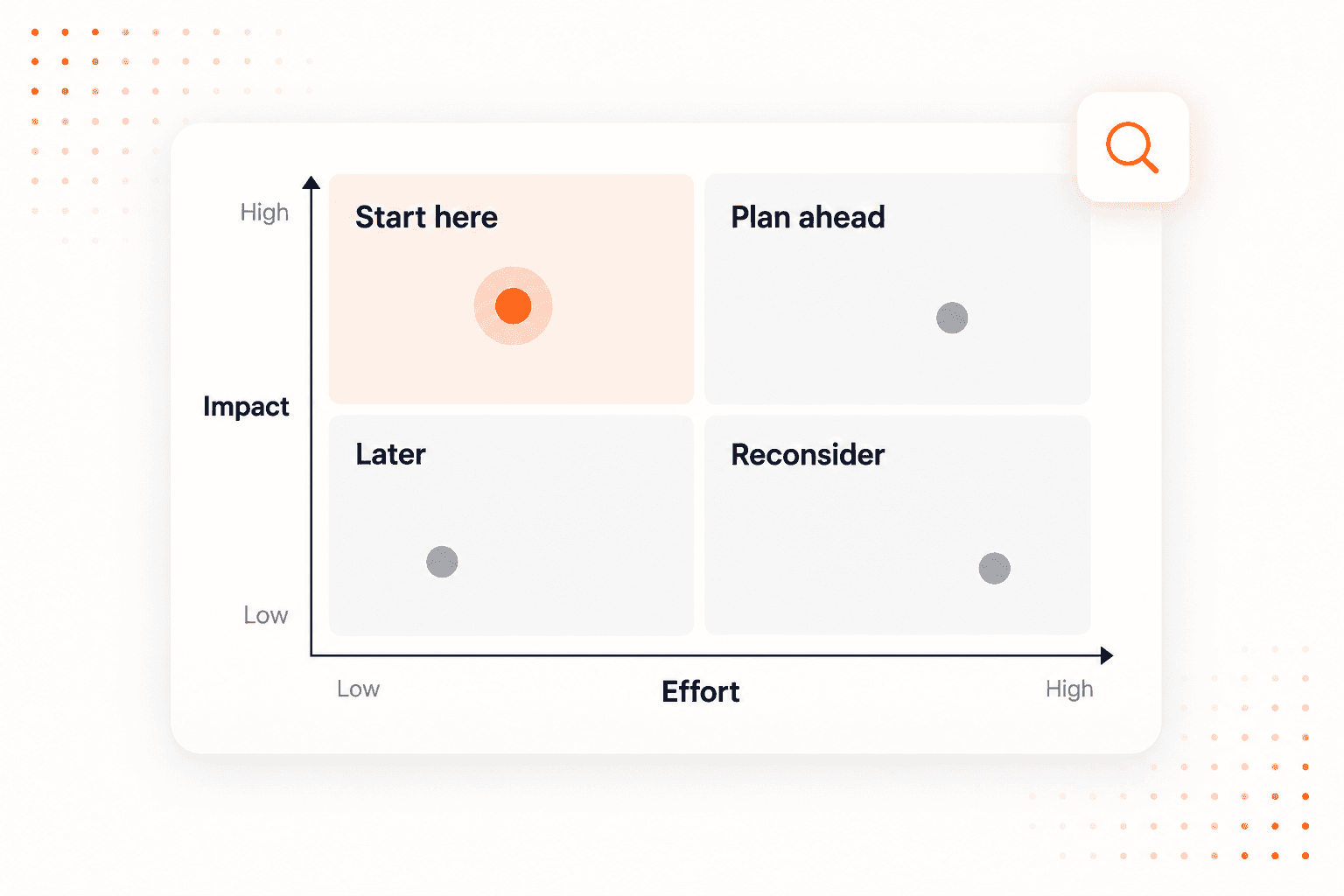
We review your current processes and available information, assess potential AI uses, and recommend tools and approaches that fit your budget and team.
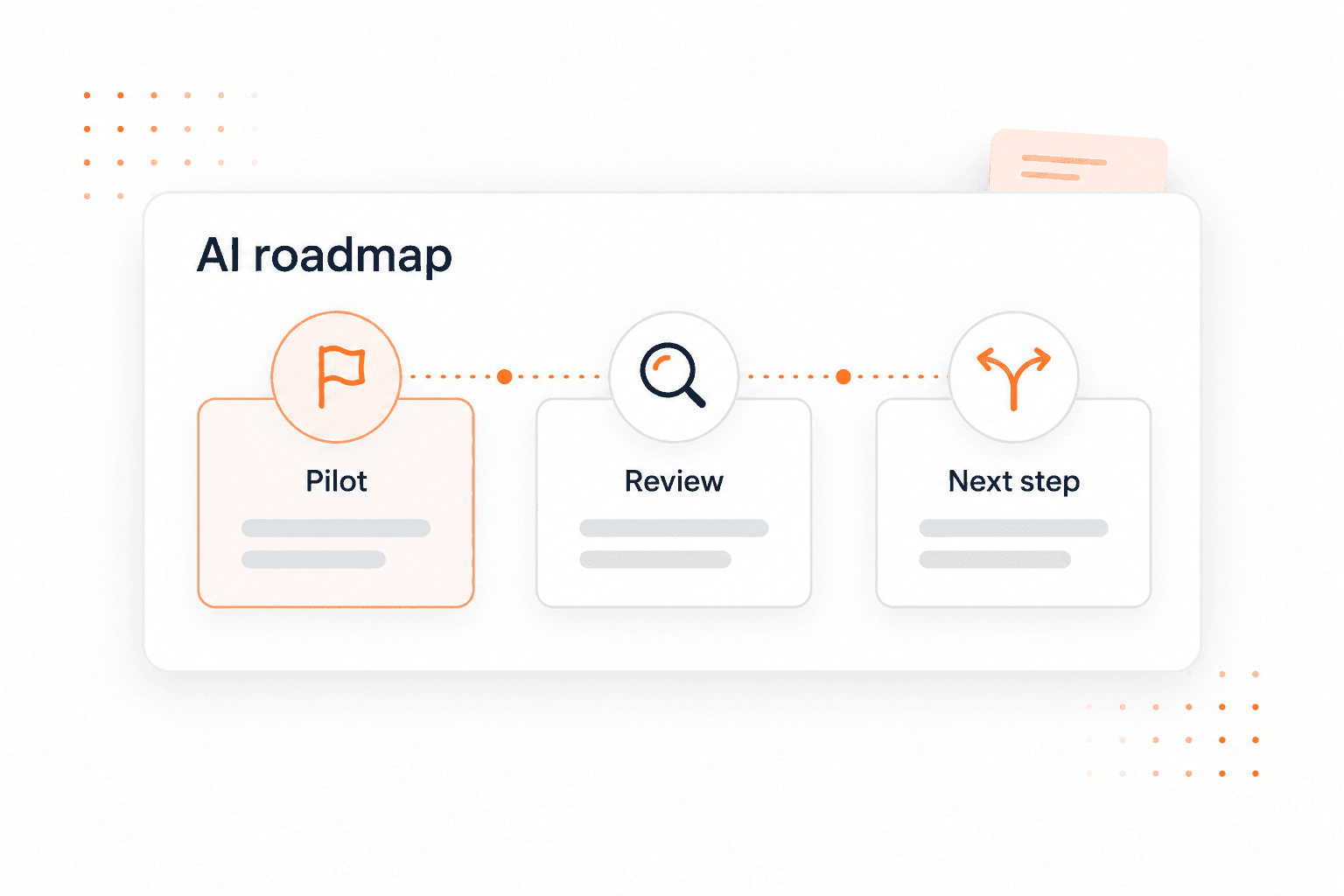
We prepare your roadmap and walk your team through the findings. Together, we agree on priorities, responsibilities, pilot success criteria, and review points.
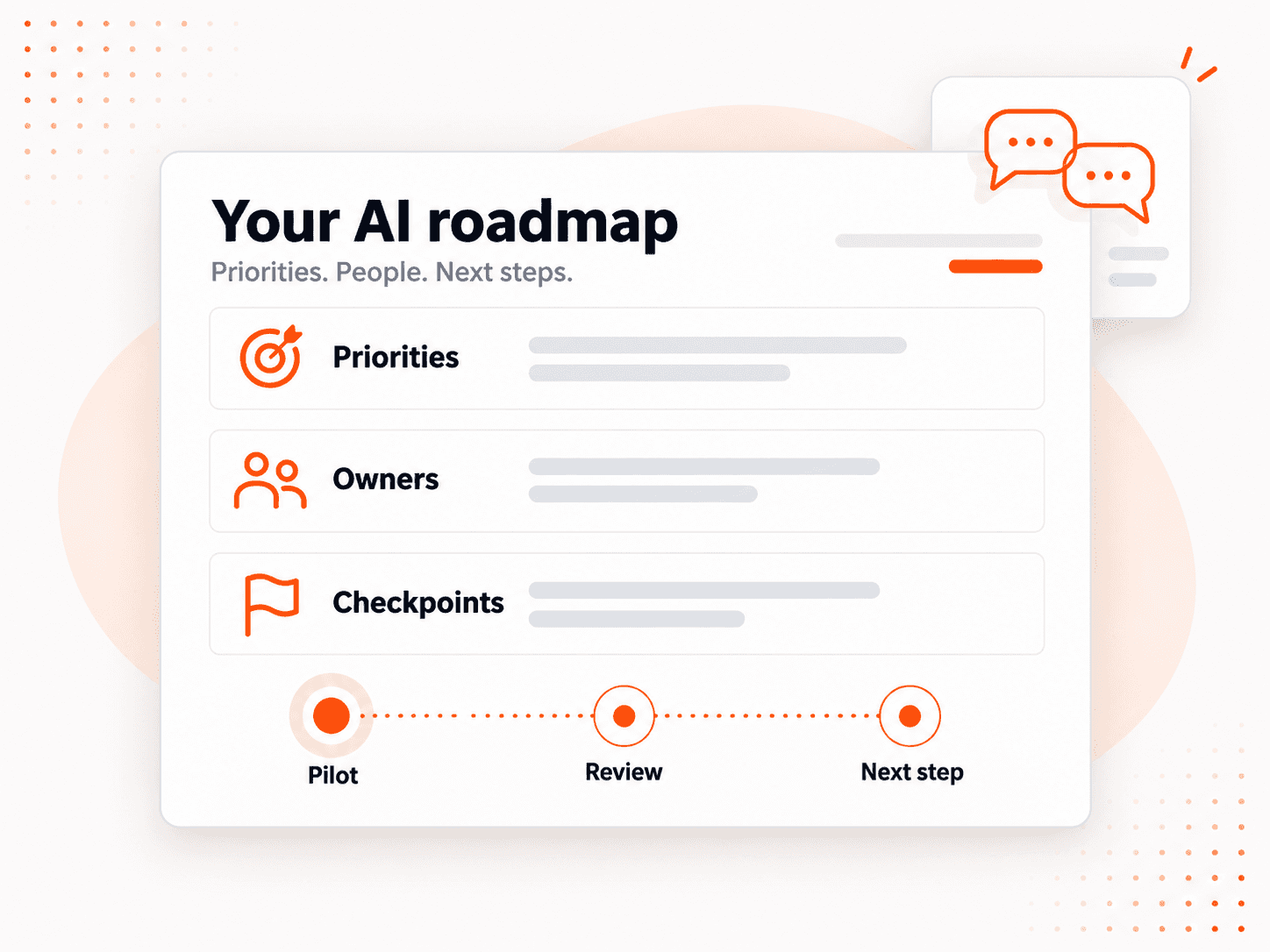
We turn the assessment into a phased plan with clear priorities, responsibilities, and checkpoints. We walk through it with your team so you understand what to start, what needs preparation, and how to review progress. A 90-day plan is one possible format; we agree the planning period with you.
Free guides to help you explore use cases, compare tools, and build your own plan.
Tutorials
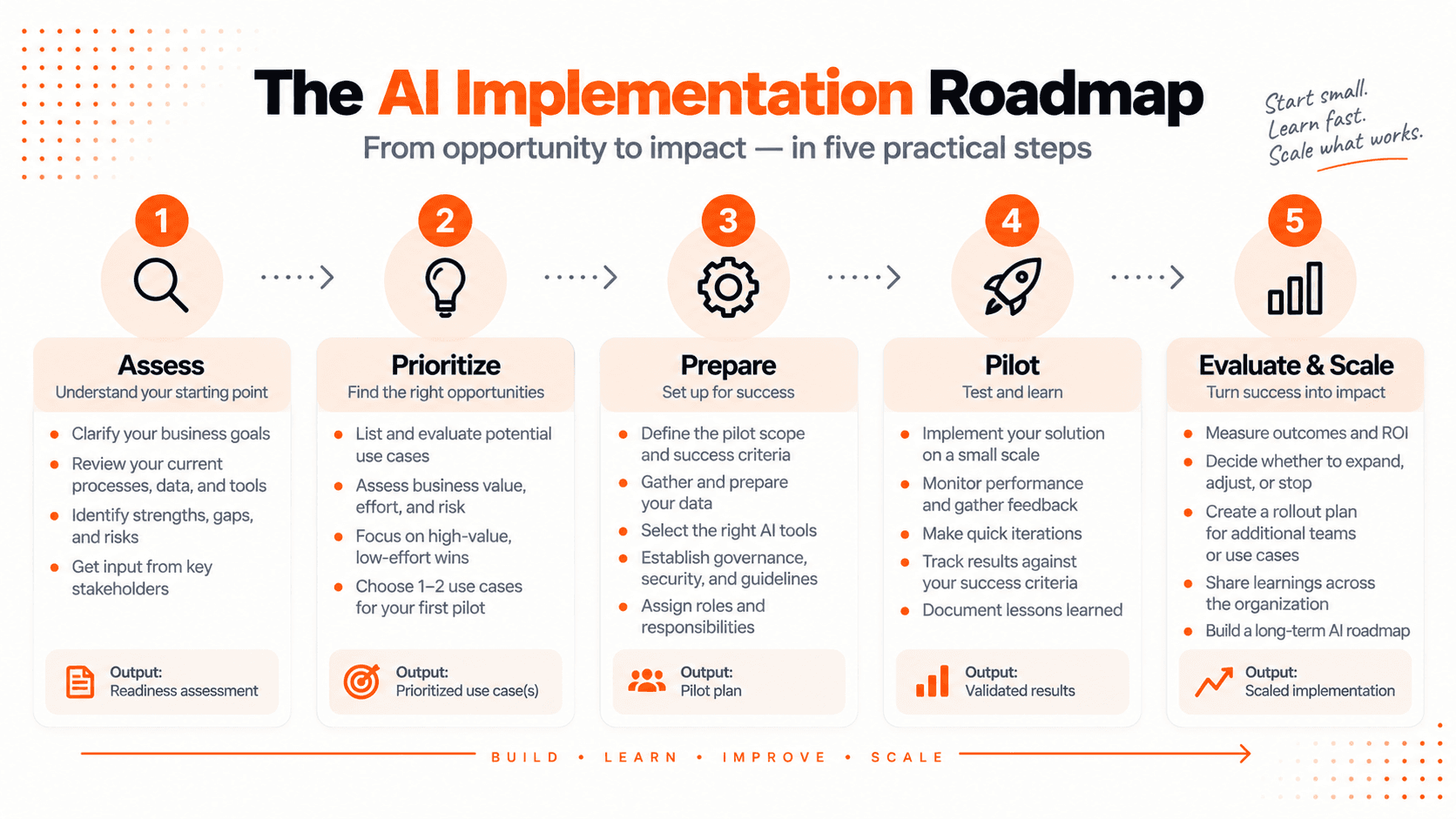
Build your own AI implementation roadmap: identify opportunities, choose a pilot, plan the work, and measure results with five visual examples and a 90-day plan.
Tutorials
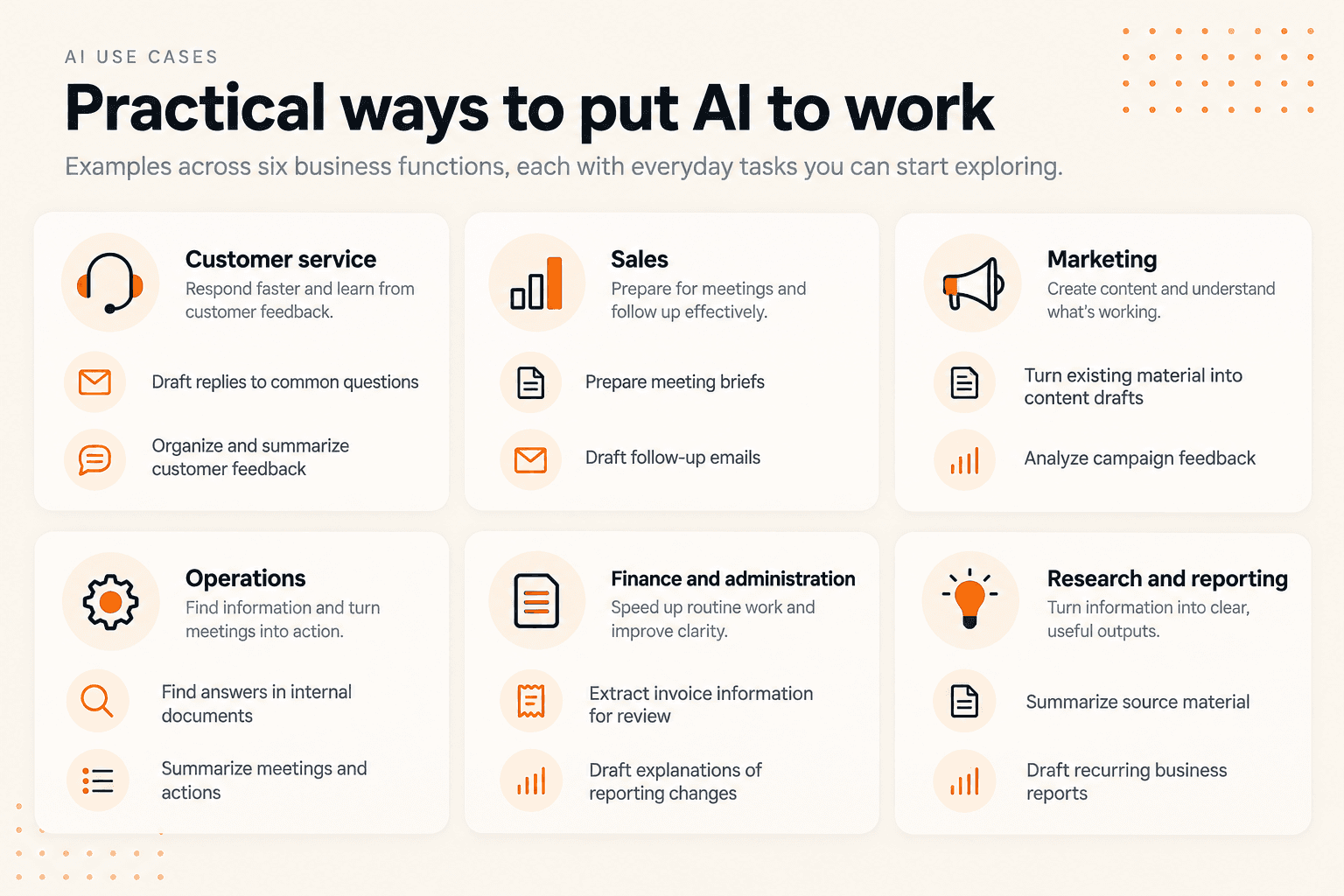
Explore 12 practical AI use cases in business across customer service, sales, marketing, operations, finance, and research, with examples you can try yourself.
AI Tools & Reviews
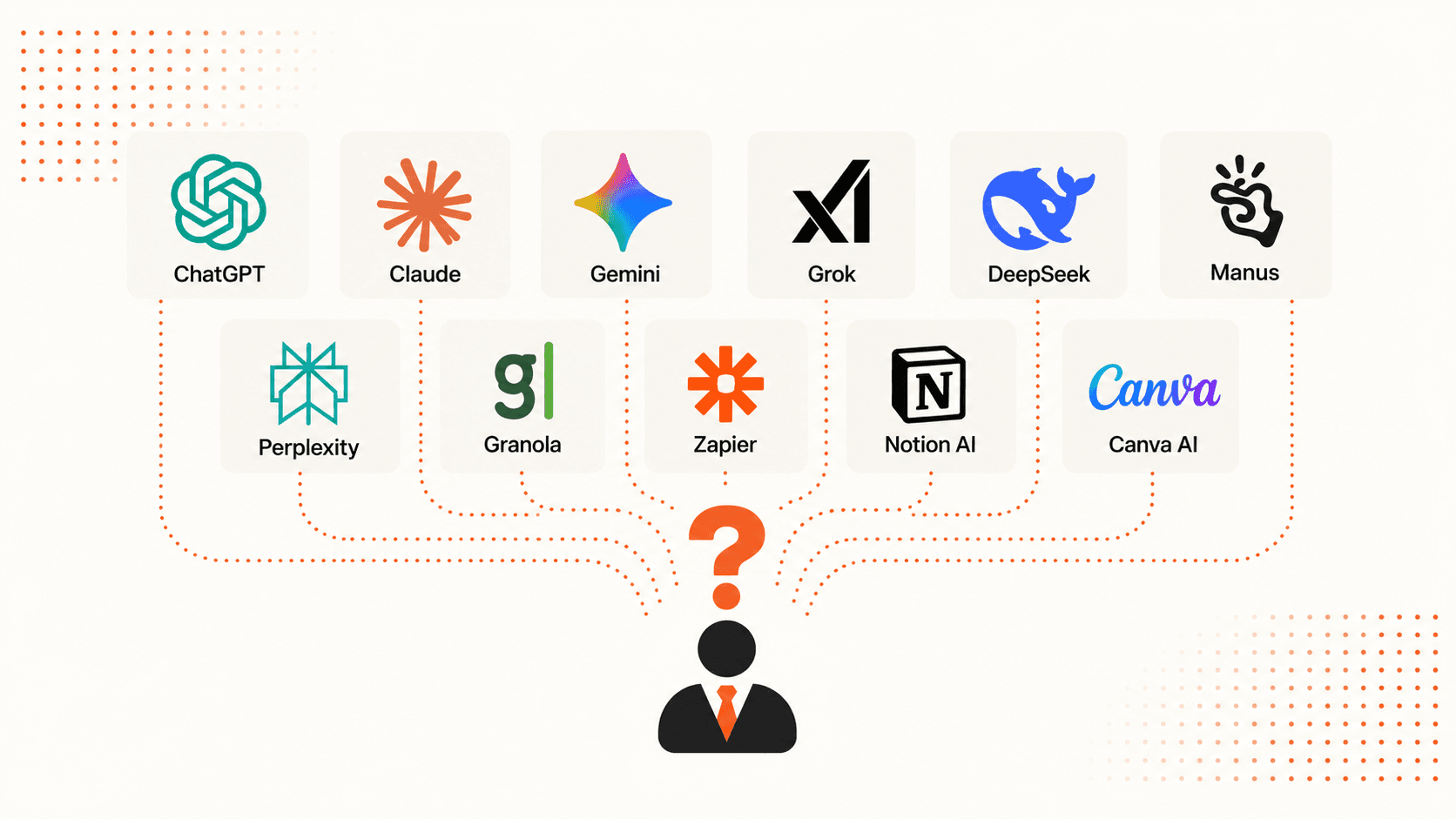
Which AI should you use for work? Compare 10 tools for writing, research, meetings, automation, documents, and design, with screenshots and practical examples.
We work directly with your company to develop its AI roadmap. We meet with key people on your team, review workflows and available information, assess opportunities, and recommend suitable tools and approaches. We then prepare the roadmap and walk your team through the priorities and next steps.
You receive prioritized AI opportunities, recommendations on suitable tools and approaches, and a tailored action plan with responsibilities, resource estimates, success criteria, and decision points. We review the findings with your team so you understand the recommendations, assumptions, and remaining questions.
No. Ninety days is an example planning period. We agree on a timeframe that fits your priorities, resources, and the work involved. Your roadmap may focus on a shorter pilot or a longer sequence of initiatives.
We agree on the delivery timeline when we scope the engagement. It depends on the workflows being assessed, stakeholder availability, and the information needed. The time we spend developing your roadmap is separate from the period of work the roadmap covers.
We propose a fixed project fee after discussing your needs. The scope, stakeholder sessions, deliverables, and timeline are agreed before work begins. Implementation and any ongoing advisory are scoped separately.
You can start with a business goal and examples of the current process. The assessment identifies data gaps and the capabilities needed to proceed. Recommendations account for who will own and support the work.
This engagement covers assessment, recommendations, and roadmap development. Your internal team or an implementation partner can carry out the plan. Any additional implementation work or ongoing advisory is agreed separately.
That is a useful finding. Recommendations may include improving source information, simplifying a process, using existing software, or deferring an AI project until the prerequisites are in place.