Purpose and agenda
Explain why the group is meeting, what they should leave with, and how the available time will be used. Set the participation expectations before introducing the material.
Guide a collaborative business workshop with agenda, problem framing, breakout prompts, and next-step commitments in one clear deck.
Customize your presentationExample preview · 7 slides
Seven example slides introduce an experimentation framework, explain its components, and lead into activities and next steps. Treat the names, dates, figures, and case-study claims as sample content to replace before facilitating your own session.
Generate a presentation from your brief, or copy the example into your workspace.
Generate in ML Clever Copy to my workspaceYour generated presentation will reflect your brief and sources. The preview shows example slides.
Explain why the group is meeting, what they should leave with, and how the available time will be used. Set the participation expectations before introducing the material.
Describe the current challenge and explain the approach in plain language. The example introduces an experimentation framework and how it connects to existing work.
Break the framework into usable parts. For experimentation, these include hypotheses, experiment design, success measures, and learning from results. Replace sample claims with relevant evidence.
Give each exercise a clear instruction, time limit, group format, and expected output. Use prompts that help participants apply the concepts to their own work.
Compare the group outputs using agreed criteria. Capture tradeoffs, open questions, and decisions separately so unresolved topics do not look settled.
Summarize what participants learned and agreed. Record actions, owners, and follow-up dates, marking proposed responsibilities until they are confirmed.
Start with a clear structure, then tailor the evidence and recommendation to the people in the room.
Choose what participants should learn, decide, or produce. Add the audience, duration, context, and exercise instructions to the prompt, then attach your supporting materials in Slides mode.
Generate from your brief or copy the example into your workspace. Adapt the concept slides and activities to your topic, replace sample content, and add an agenda that fits your session.
Check exercise timing and make sure instructions work without extra explanation. During the workshop, record decisions and open questions. Confirm action owners and follow-up dates before sharing the final deck.
Include the purpose, agenda, problem context, key concepts, exercises, discussion prompts, and next steps. Each activity should say what participants need to do and what they should produce.
Yes. Replace the experimentation topic with your strategy, discovery, planning, or training goal. Adjust the activities and decision criteria for the group while keeping a clear flow from context to action.
The preview illustrates an experimentation workshop. Use the prompt to create an agenda for your own session length, including introductions, activities, discussion, breaks, and next steps where appropriate.
Summarize the decisions and unresolved questions, then assign an owner and target date to each agreed action. Keep proposed actions clearly labeled until the group has confirmed them.
You can browse the example slides and use the outline and prompt on this page. Generate a presentation from your own brief or copy the example into your ML Clever workspace to adapt its text, structure, and theme.
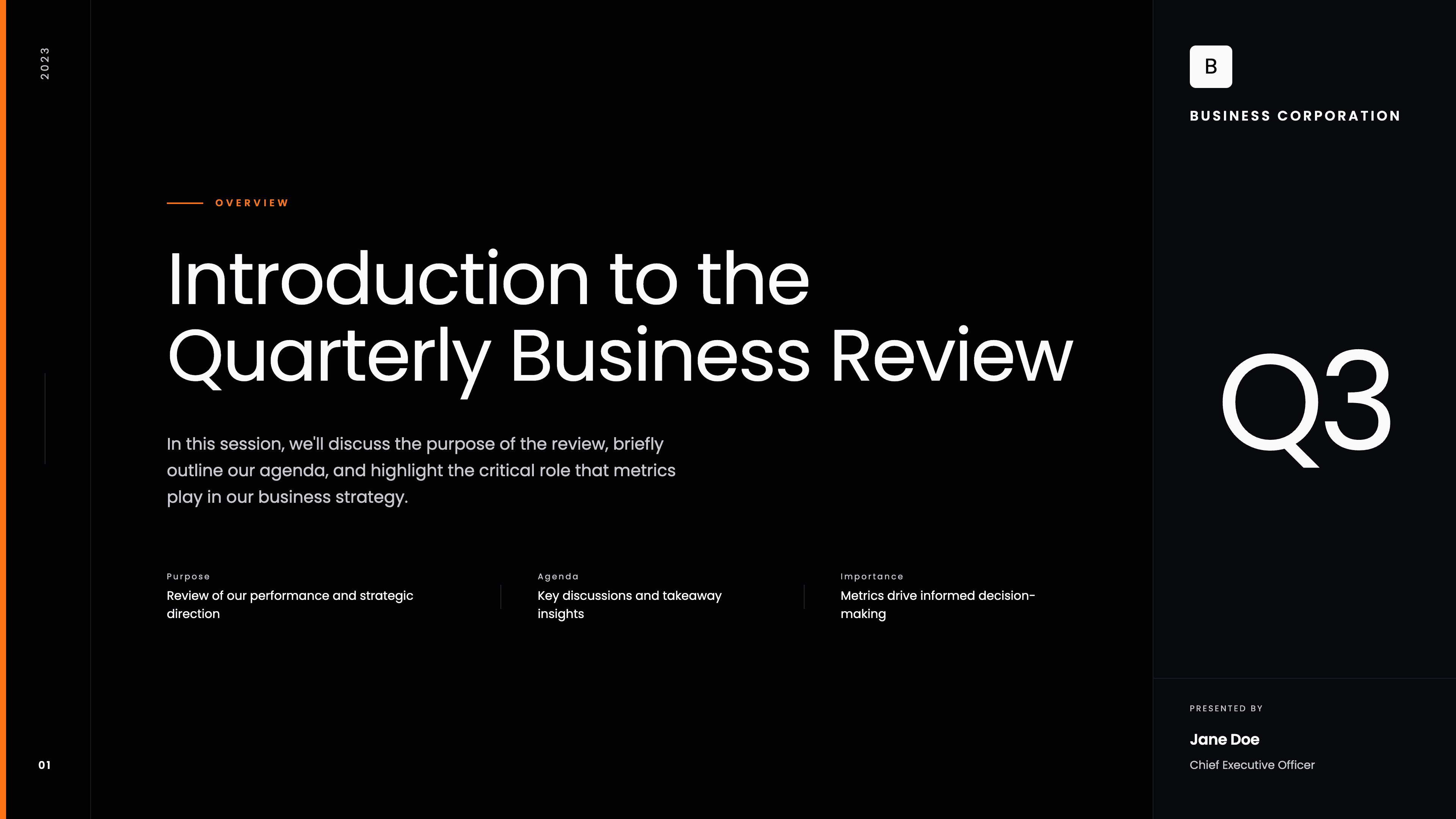
Corporate
Run an executive-ready QBR that ties strategy, product, revenue, and delivery to clear outcomes and next-quarter commitments.
Startup
Introduce your climate-tech venture with a concise, credibility-building deck that highlights mission, market need, and measurable impact.

Corporate
Deliver a polished conference keynote that showcases your product vision, customer impact, and roadmap with crisp visuals and data points.