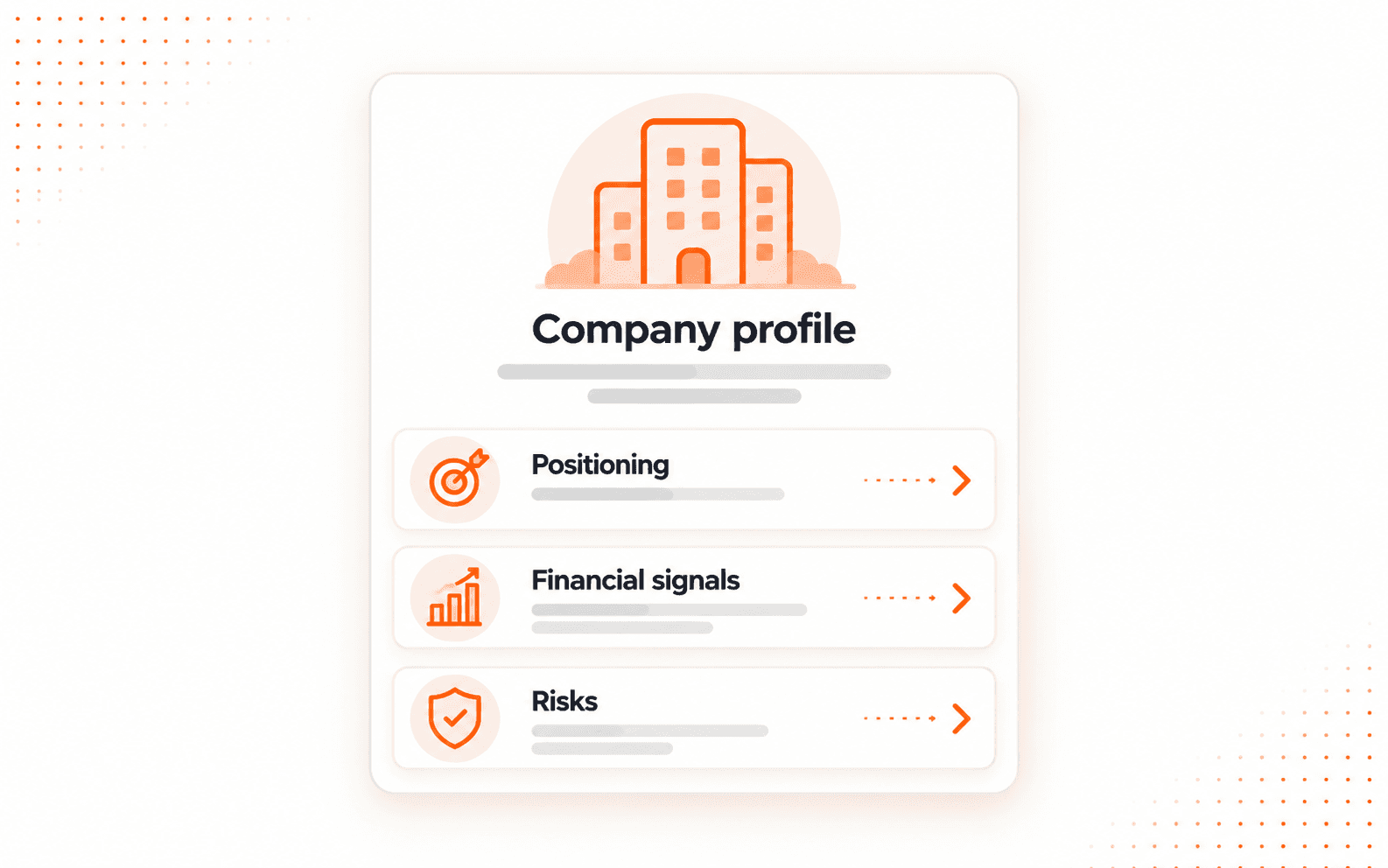
Build the company profile
Bring positioning, market context, financial signals, and strategic risks into one concise view.
Name the company and peer set. ML Clever builds a clear profile, competitive comparison, and decision-ready point of view.
Use the same structured analysis for account planning, strategy, partnerships, and corporate development.
Bring positioning, market context, financial signals, and strategic risks into one concise view.
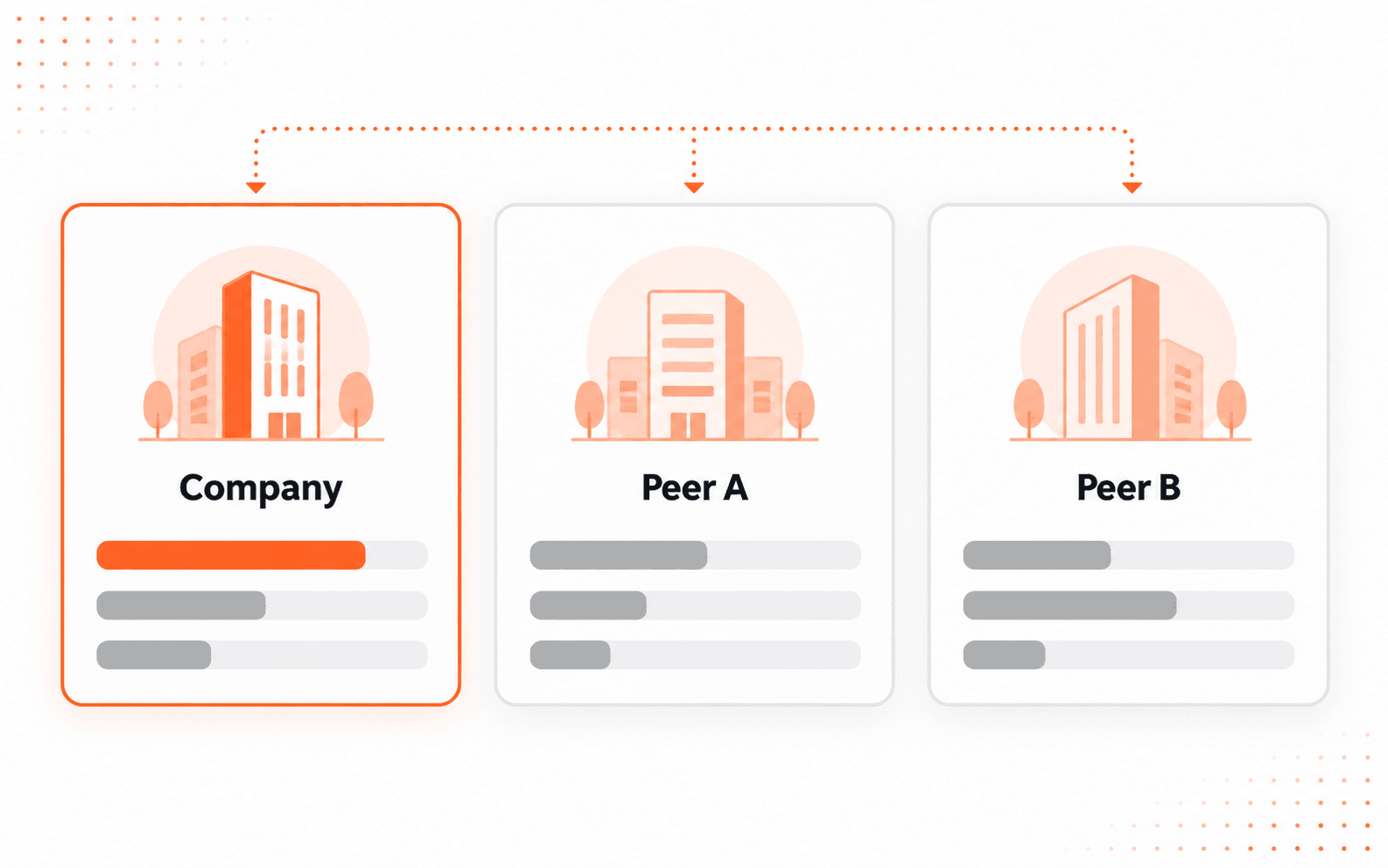
Benchmark the company against relevant peers without stitching the comparison together manually.
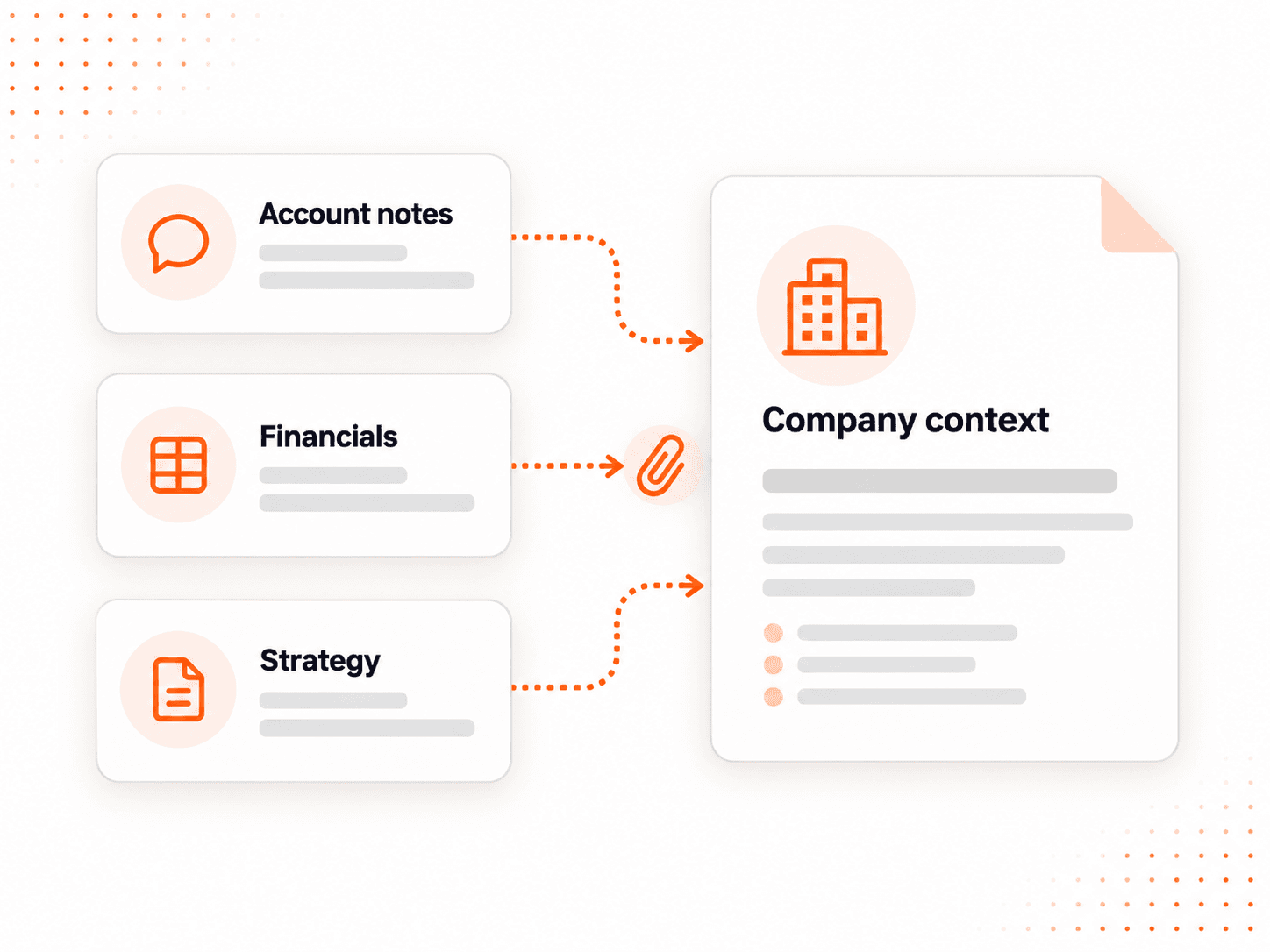
Add account notes, CRM context, financial snapshots, or strategy documents so the analysis reflects what your team already knows.
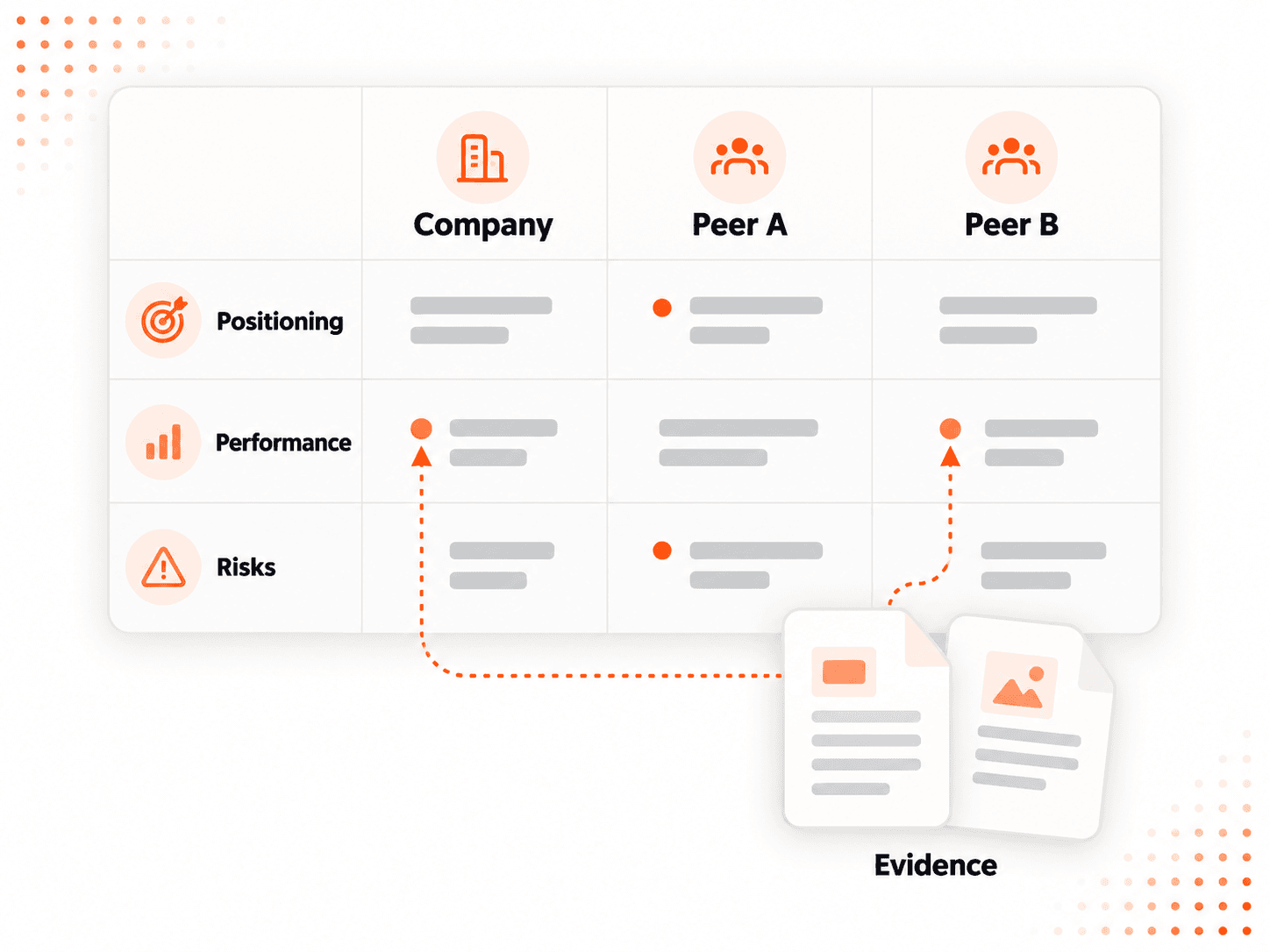
Compare narrative, metrics, strengths, and risks across a peer set while keeping the supporting evidence connected.
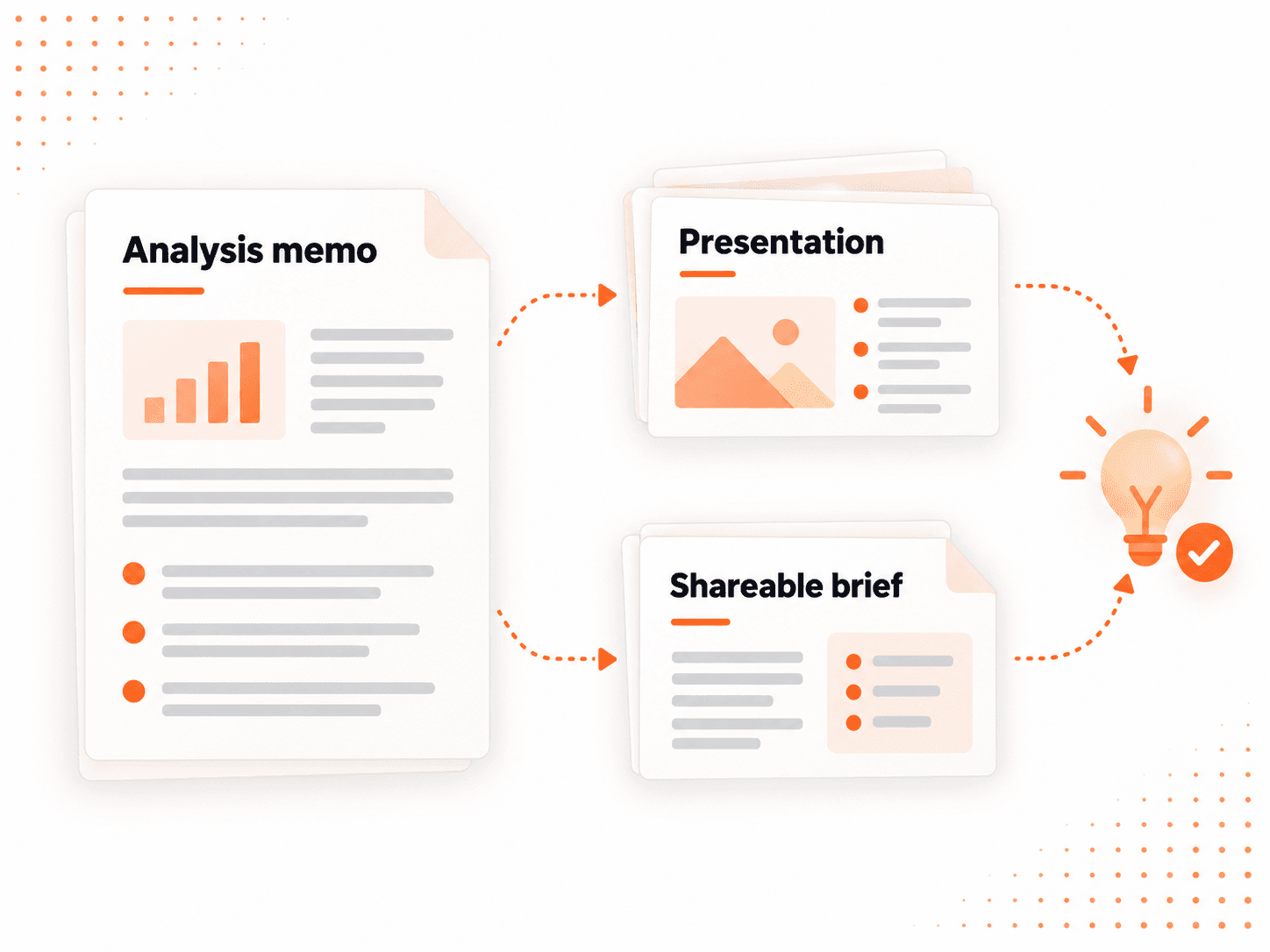
Turn the profile and comparison into a concise memo that can also become a presentation or client-ready deliverable.
Yes. Add financial snapshots or other internal sources, or run the playbook using public information only.
Yes. Update the peer-set variable whenever the competitive frame changes.
Yes. Refine the analysis as a document, then carry the same context into a presentation or another shareable format.